Learning how to cover a chicken run is one of the highest-value upgrades you can make to your setup: a covered run keeps your flock dry in the rain, shaded from summer sun, safe from hawks and raccoons, and protected from the wild-bird droppings that can carry avian flu. Below are seven of the best ways to cover a poultry run, with honest pros and cons of each, so you can pick the right roof for your climate, your predators, and your budget.
Short answer: The best chicken run cover depends on your priorities. For full weather and predator protection, a solid polycarbonate or corrugated roof wins. For the strongest predator defense alone, use hardware cloth. For aerial-predator protection on a tight budget, netting does the job. Most keepers end up combining two of these.
Why covering your chicken run matters
Here is the key thing to understand about keeping chickens: the coop is a bedroom, not a house. Your hens only go inside to roost at night and to lay their eggs. They spend their entire day out in the run — foraging, dust-bathing, stretching their wings, and being chickens. That makes the run, not the coop, the space where welfare is really won or lost. A compact, well-built coop paired with a roomy, covered run is what makes a backyard setup work, because the run becomes usable in almost any weather.
A good cover does three jobs at once:
- Weather protection: keeps rain, snow, and harsh sun off the run so the ground stays drier and the birds stay comfortable.
- Predator defense: blocks aerial hunters like hawks and owls, and (with the right material) climbing raiders like raccoons.
- Biosecurity: stops wild birds from landing in the run and contaminating feed and water with droppings — a real concern during avian-flu season.
1. Wire mesh or hardware cloth
What it is: Sturdy, galvanized metal mesh (ideally 1/2" hardware cloth) fixed over the top of the run.
Pros:
- Excellent predator protection — blocks birds of prey, raccoons, and foxes.
- Durable and weather-resistant for years.
Cons:
- Expensive, especially over a large run.
- Needs a strong frame to prevent sagging.
- Offers no shade or rain protection on its own.
- Can collapse under heavy snow if the mesh openings are too large.
2. Tarp (tarpaulin)
What it is: Heavy-duty, weather-resistant fabric stretched across the run.

Pros:
- Affordable and easy to install.
- Provides instant shade and rain protection.
- Lightweight and available in many sizes and colors.
Cons:
- Less durable — prone to tearing in strong winds or under heavy snow.
- Offers minimal predator protection.
- Can reduce natural light inside the run.
- Water runoff tends to pool at the edges unless pitched.
3. Solid roof (corrugated metal or polycarbonate)
What it is: Rigid corrugated metal or clear polycarbonate panels fixed to a framework over the run. A clear PVC or polycarbonate panel is a popular choice because it sheds rain while still letting daylight through — often the best chicken run roof for all-weather use.
Pros:
- Full protection from rain, snow, and sun — the most weatherproof option.
- Long-lasting and low maintenance.
- Strong predator protection from above.
Cons:
- Can be costly and labor-intensive to install.
- Opaque panels reduce natural light (clear polycarbonate or PVC solves this).
- May need gutters to manage rain runoff.
4. Chicken wire
What it is: Lightweight, hexagonal-patterned wire mesh — the classic budget option.

Pros:
- Cheap and widely available.
- Quick and easy to install.
Cons:
- Weak against determined predators — raccoons and foxes can tear or chew through it.
- Provides no shade or rain protection.
Chicken wire keeps birds in, but it is not a security barrier. For predator-proofing, pair it with hardware cloth or read our guide on how to fence your chickens.
5. Netting or mesh
What it is: Lightweight plastic or nylon netting draped over the run.

Pros:
- Inexpensive and easy to handle.
- Protects against aerial predators like hawks and owls.
- Allows sunlight and airflow through to the run.
- Can be tented over a central post so rain and snow slide off.
Cons:
- Ineffective against climbing or digging predators.
- May sag or tear over time, so it needs regular checks.
6. Combination systems
What it is: A mix of wire mesh, shade cloth, and solid roofing for balanced, layered protection — the approach most experienced keepers settle on.
Pros:
- Customizable to deliver both shade and security.
- Layers multiple types of protection — for example, a solid roof over part of the run and netting over the rest.
Cons:
- Higher upfront cost.
- Requires careful planning and some ongoing maintenance.
7. Natural cover (trees & shrubs)
What it is: Using nearby trees or shrubs for shade and partial predator deterrence.

Pros:
- Attractive and environmentally friendly.
- Provides natural shade that reduces summer heat stress.
Cons:
- Chickens may try to roost in the trees.
- Minimal predator protection — it should never be your only cover.
- Deciduous trees offer little protection once they drop their leaves in winter.
How to choose the best chicken run cover
There is no single best chicken run roof — the right choice depends on three things:
- Predators in your area: If hawks are your main worry, netting or wire mesh over the top is essential. For raccoons, foxes, and other ground raiders, hardware cloth or a solid roof works best. Many keepers also add an electric poultry fence around the run for extra ground-level defense.
- Climate: In hot regions, prioritize shade — shade cloth, a solid roof, or natural cover. In snowy regions, make sure the cover can carry the weight without collapsing, and pitch it so snow slides off.
- Budget & size: Large runs often pair a cheaper material like netting with a smaller solid-roofed section for an all-weather refuge. Smaller runs can be fully covered with hardware cloth or polycarbonate at a reasonable cost.
Covering the run also helps with biosecurity: keeping wild birds out means their droppings stay out of your flock's feed and water, which matters during avian-flu season. It pairs well with steps to stop wildlife from eating your chickens' feed.
The run is where your flock really lives
It is worth repeating, because it changes how you plan your whole setup: chickens spend their days in the run, not the coop. The coop is just their bedroom — somewhere safe and dry to roost at night and lay their eggs. So when you are deciding where to spend your money and space, put it into a generous, well-covered run rather than an oversized coop. Aim for at least 8–10 square feet of run space per bird; more is always better.
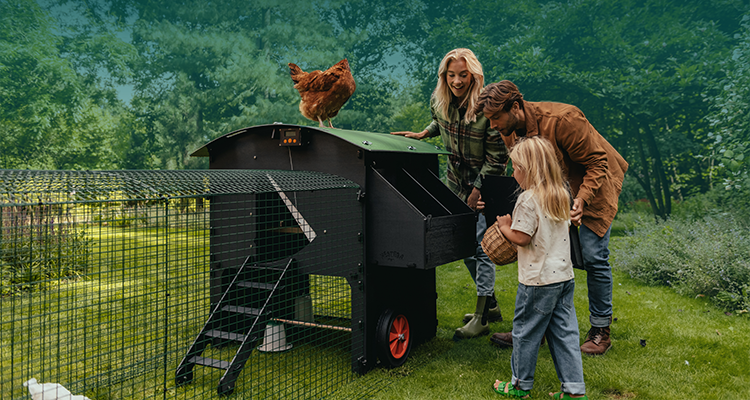
That is exactly why Nestera designs compact, easy-clean coops paired with spacious runs. Our 6.5ft run for the Large Penthouse coop gives your flock a roomy, secure area to forage and dust-bathe all day, and its frame is ready to take a cover of your choice — netting, a tarp, or solid panels. You can add a 3.5ft run extension to make it even bigger. A snug coop plus a big covered run is the setup that keeps hens healthy, warm at night, and active during the day.
Frequently asked questions
How do I cover a chicken run cheaply?
Netting or a tarp is the most affordable way to cover a chicken run. Netting stops hawks and lets light and air through; a tarp adds rain and sun protection. Both are budget-friendly, though neither stops climbing predators on its own — combine them with hardware cloth on the sides for security.
What is the best chicken run roof for all weather?
A solid roof in clear polycarbonate or corrugated panels gives the best all-weather protection: it sheds rain and snow, blocks harsh sun, and keeps predators out from above. Clear panels have the advantage of letting daylight reach the run.
Do I need to cover my chicken run completely?
You do not have to cover every inch, but covering at least part of the run is strongly recommended. A covered section gives your flock a dry, shaded refuge in bad weather and keeps wild birds — and the diseases they carry — away from feed and water. Many keepers cover one half solidly and net the rest.
Will a cover protect chickens from hawks?
Yes. Any overhead cover — netting, mesh, or a solid roof — will protect chickens from hawks and other birds of prey, which hunt from above. Netting is the cheapest effective option for aerial predators specifically.
Ready to give your flock a safe place to spend the day? Explore the Nestera run for the Large Penthouse coop, or browse our full range of recycled-plastic chicken coops to build a compact, predator-secure setup your hens will love.