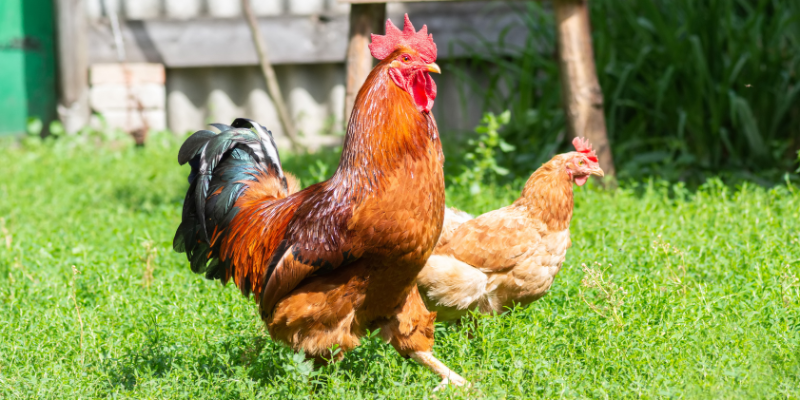
Do chickens need a rooster? The short answer is no — a backyard flock of hens lays eggs perfectly well without one, and many happy flocks never have a male at all. Whether you want a rooster is a different question, and it comes down to your goals, your neighbors, and your local rules. Below we walk through what a rooster actually adds, the trade-offs to weigh, and how hens get along on their own.
Do hens need a rooster to lay eggs?
No. Hens lay eggs on their own schedule regardless of whether a rooster is present. A rooster only matters if you want fertile eggs for hatching — and even then, you won't suddenly be overrun with chicks. Contrary to popular belief, you will not end up with hundreds of chicks running around the yard.

Fertile eggs sit in a kind of stasis until conditions are right for them to develop. If you collect eggs regularly and store them in a cool spot, they won't begin to develop and won't hatch. And a fertilized egg is perfectly safe to eat — it tastes and looks the same as an unfertilized one.
Rooster or cockerel? Know your terms
Quick terminology check: in the US, a mature male chicken is a rooster. A cockerel is technically a young male under a year old. We'll use "rooster" throughout, since that's the everyday American term.
Are chickens happier with a rooster? The pros
A good rooster can bring real benefits to a flock:
- Flock protection. Roosters are often fiercely protective of their hens. They call out to warn the flock of ground and aerial predators, herd everyone toward shelter, and frequently stand guard at the coop door at dusk until the last hen is in. (For hands-off security at dusk and dawn, many keepers pair this with a battery-powered automatic door opener.)
- Flock harmony. A steady rooster helps establish and keep the pecking order, which can reduce squabbling among hens. If you're curious how that social structure works, see our guide on how flock hierarchy works with chickens.
- Fertile eggs. If you want to hatch your own chicks, you'll need a rooster in the flock.
- "Tidbitting." Roosters find treats and share them with the hens, repeatedly picking up and dropping tasty morsels to call the girls over. It's a charming, attentive behavior — a bit like inviting someone out to dinner.
Cons of keeping a rooster
The two biggest downsides are noise and aggression.
Crowing: Some people love the sound; others don't, especially early in the morning. Roosters crow throughout the day, not just at dawn, so consider how close your neighbors are.

Aggression: Aggression tends to be worse in spring and summer, when testosterone runs high and males compete. A rooster may even read a human as a rival because of our size, so calm, confident handling matters. Some breeds are known for gentle temperaments — Cochins, Brahmas, and Orpingtons among them — while certain bantams can be feistier, which makes sense given how small they are next to most predators.

Hen wear-and-tear: During mating season a rooster can wear feathers off a hen's back (from his claws) or neck (from his beak), and favorite hens take the brunt of it. You can ease this with hen saddles — small cloth pieces that loop under the wings to protect the skin and feathers. As a rule of thumb, keep just one male per flock and give him plenty of hens so the attention is spread out.
Check your local rules first
Before you commit, check whether a rooster is even allowed where you live. Many US cities, counties, and homeowners' associations (HOAs) permit hens but ban roosters outright because of the crowing, and some cap how many birds you can keep. Look up your municipal ordinances and any HOA covenants before bringing a male home — it's the single most common reason new keepers have to rehome a rooster.
View this post on Instagram
Do hens get along without a rooster?
Yes — flocks of hens manage very well on their own. The hens will sort out their own pecking order, lay just as reliably, and live calm, contented lives without a male in the mix. If you can keep a suitable rooster and your local rules allow it, the pros may outweigh the cons. If not, your hens will be perfectly happy without one, as long as their setup keeps them safe.
That last part is key: without a rooster on watch, predator protection is on you. A secure, covered chicken coop and run lets your flock get out early and forage safely, and it doubles as a settling-in space when you introduce new hens to your flock. Aim to give your birds access to a protected area for most of the day — room enough to behave naturally and stay safe from predators.
Frequently asked questions
Do chickens need a rooster to lay eggs?
No. Hens lay eggs without a rooster. You only need a rooster if you want fertile eggs to hatch chicks.
Are chickens happier with or without a rooster?
Hens are content either way. A good rooster adds predator awareness and flock structure, but hens live calm, happy lives without one — so the "happier" choice depends on your goals, your neighbors, and your local rules.
Should I get a rooster for my backyard flock?
Only if you want fertile eggs or extra flock protection, your neighbors won't mind the crowing, and your city or HOA allows roosters. Always check local ordinances first.
How many roosters should I keep?
Just one per flock, with plenty of hens to share his attention. Multiple males tend to fight and over-mate individual hens.
Whether or not you add a rooster, a predator-proof home is what keeps a flock safe and relaxed. Explore the Nestera chicken coop — made from 70% recycled plastic, UV-protected, red-mite resistant, easy to clean, and backed by a 25-year guarantee.