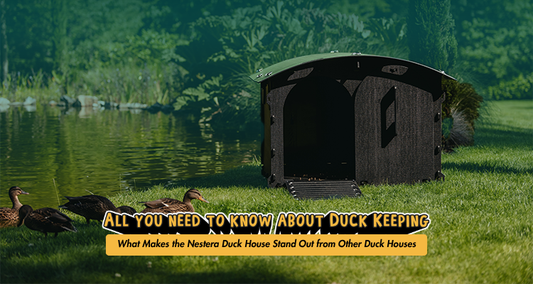
If you're weighing up a plastic chicken coop against a traditional wooden one, here's the honest answer: a well-made recycled plastic coop is easier to clean, far more resistant to red mites, and built to outlast wood by decades. For years the only material choice for a coop was timber, but not all plastic coops are created equal — and the difference matters for your hens' health and your weekends.
Short answer: Choose a plastic chicken coop when you want a hygienic, low-maintenance home that won't rot, warp, or harbor red mites — and that you can hose clean in minutes. Nestera coops are made from 70% recycled plastic, are UV-protected, and carry a 25-year guarantee.

Many cheap plastic coops are mass-produced overseas and sold with a disappointing two-year warranty. Nestera coops are different: developed solidly and sustainably from recycled plastic waste, with both the chickens and the keeper in mind. That's why we're confident to back every coop with a guarantee that stretches far beyond the industry norm.
Plastic vs. Wooden Chicken Coops: Why Plastic Wins
The biggest practical differences between a plastic and a wooden coop come down to cleaning, parasites, durability, and lifetime cost. Here's how a recycled plastic coop compares.
1. Maintenance-Free, Year After Year
There's no need to treat a Nestera coop with a poultry-safe preservative or replace rotten timbers. Our coops shrug off extreme weather and UV and won't degrade over time — which is exactly why we offer an industry-beating 25-year guarantee. Wood, by contrast, needs re-treating, and soft or rotten panels eventually have to be replaced. If you're tired of the upkeep, it's worth reading our rundown of 8 reasons to avoid wooden coops.
2. Easy to Clean — Just Hose It Down
A plastic chicken coop is genuinely easy to clean. A quick hose-down does the job, and any stubborn mud or droppings lift off with a stiff brush. Our removable droppings trays make the routine even simpler. Because the plastic is smooth and non-porous, our coops dry in minutes — a huge advantage in winter, when wood can take hours to dry out.

If you raise different batches of birds, biosecurity is crucial — you don't want to carry disease from one batch to the next. It's hard to be sure a wooden coop is fully disinfected, because timber absorbs moisture and hides bacteria in its grain. A plastic coop can be washed down, treated with disinfectant, and made ready for the next batch with confidence.
3. Red-Mite Resistant: No Cracks for Mites to Hide In
This is the big one. A recycled plastic coop is far less likely to suffer from the dreaded red mite. Red mites are blood-sucking ectoparasites that hide in cracks and crevices during the day and emerge at night to feed on roosting hens. Bad infestations cut egg production, leave birds anemic, and in severe cases can kill them. If you're not sure what to look for, our guide on how to recognize red mites and their effects on poultry walks you through it.
Wooden coops are full of seams, joints, and rough grain — perfect hiding spots where mites breed out of reach. Nestera coops are designed with far fewer hiding places than a similar-sized wooden coop. And if mites do appear, you can power-wash a plastic coop and rinse them straight away. In a wooden coop, mites also shelter under roofing felt where they're nearly impossible to reach, so keeping timber mite-free is costly and time-consuming, with treatments needed month after month all year round. For broader background, see our piece on why cheap wooden chicken coops are a bad idea.
4. Built-In Ventilation
Good ventilation keeps the air dry and healthy and helps control condensation — both important for poultry. Every Nestera coop includes permanent and adjustable ventilation, designed in from the start.

5. Won't Rot, Warp, or Absorb Water
The recycled plastic we use is a strong, weatherproof material that won't rot, warp, or soak up rain the way timber does. That keeps the structure sound and the interior dry, year after year. In winter, the built-in ventilation means the inside of the coop stays close to the outside temperature — and that's fine, because hens are well insulated by their own feathers and huddle together on the perch to share warmth. In summer, our solid UV-resistant roofs reflect heat well. As with any coop, give your birds shade if they're restricted to a run.
Don't Plastic (or Black) Coops Get Too Hot in Summer?
It's a fair question, and a common myth. In real-world testing, a well-ventilated black plastic coop does not bake your hens — the solid, UV-resistant roof reflects heat, and the airflow does the rest. We dug into the data in debunking the myth: do black plastic chicken coops get too hot in summer? The short version: ventilation and roof design matter far more than color.
6. Lower Lifetime Cost and a 25-Year Guarantee
The upfront price of a wooden coop is often similar to a plastic one — but the lifetime cost of timber runs far higher. Wooden coops need regular wood protection, panel repairs, and ongoing mite treatment. Nestera coops are built so solidly, from red-mite-resistant recycled plastic, that we back the entire range with a 25-year guarantee. Most other plastic coops offer only a worrying two-year warranty.
The Coop Is a Bedroom, Not a House
One worry we hear a lot: "Won't a compact plastic coop be too small?" It's worth reframing how a coop is actually used. A chicken coop is overnight sleeping and egg-laying quarters — not where your hens spend their day. Chickens spend daylight hours outside in a run or free-ranging: foraging, dust-bathing, and stretching their legs. They only head into the coop to roost at night and to lay.
So judge a coop by whether every bird can roost comfortably (allow 8–12 inches of perch per bird) and nest (one box per 3–4 hens), plus good ventilation, dryness, and predator security — not by floor square footage. Put your space budget into the run or yard instead, aiming for 8–10+ square feet per bird; more is always better. A snug coop is also a warmer coop, because hens share body heat on the perch, and it's easier to clean and move.
You'll often see a "3–4 square feet per hen" figure quoted. That guidance is aimed mainly at birds confined indoors with little outdoor access; with a generous run or free-range time, the coop itself can be snug. The national Cooperative Extension service notes that indoor space needs depend on outdoor access, that stocking density should let birds express their natural behaviors, and that a coop should be small enough to avoid being too cold and drafty in winter. Nestera coops have kept flocks healthy across the UK and Europe for nearly 20 years on exactly this principle.
Which Nestera Plastic Coop Is Right for You?
Our recycled plastic coops come in sizes to suit small backyard flocks up to larger setups:
- Small — 2 large / 3 medium / 5 bantam hens
- Medium — 3 large / 5 medium / 9 bantam hens
- Large — 5 large / 8 medium / 12–15 bantam hens
Start with the Nestera recycled plastic chicken coop (House and Lodge, for 2–15 hens). If you want our most robust, predator-tough compact coop, the Atlas is built with 8mm walls and a 6mm roof. And the Aspen chicken coop is a great option if you'd like to add a solar smart auto door later.
Frequently Asked Questions
Are plastic chicken coops better than wooden ones?
For most keepers, yes. Plastic coops are easier to clean, far more red-mite resistant, won't rot or warp, and last longer — giving a lower lifetime cost despite a similar upfront price. Wood needs ongoing treatment and repair.
Do plastic chicken coops get too hot in summer?
A well-ventilated plastic coop with a UV-resistant roof does not overheat. Airflow and roof design matter far more than color, and shade in the run helps on the hottest days. See our detailed myth-busting article for the full picture.
Is a recycled plastic chicken coop good for the environment?
Nestera coops are made from 70% recycled plastic that would otherwise be waste, are UV-protected to last decades, and carry a 25-year guarantee — so one coop replaces many short-lived wooden ones over its lifetime.
How do you clean a plastic chicken coop?
Hose it down, brush off any stubborn droppings with a stiff brush, and treat with disinfectant if needed. The smooth, non-porous surface dries in minutes and is simple to keep hygienic between flocks.
Ready to Make the Switch?
When you compare a recycled plastic coop to an old-fashioned wooden one — on hygiene, mite resistance, durability, and lifetime cost — it's a clear choice. Explore the full range of Nestera recycled plastic chicken coops and find the right home for your flock.